Wedding Hotel Room Blocks:
A Planner’s Complete Guide | Aisle Planner Pro
Learn how wedding hotel room blocks work, when to book, how many rooms you need and how Aisle Planner Pro members can simplify hotel sourcing with Engine.
📖 Read Time:
📅 Date:
Great planning doesn’t stop at the venue doors.
When guests are traveling, where they stay becomes part of the experience too. From finding the right hotels to navigating room blocks, rates and contracts, travel can quickly become another workflow on a planner’s plate.
Here’s how to make it easier.
If you’ve ever tried to reserve a block of hotel rooms for a wedding, you already know it can be one of the sneakier tasks on the planning list. You start out by playing phone tag with a handful of hotel sales offices for proposals, then by the time you get anyone to respond, you’re digging into contract terms like attrition and cutoff dates, then whatever’s buried in the deposit clauses to figure out what’s fair and what to push back on.
That’s just for one wedding. Across a whole season, it can become a second job you didn’t sign up for. Every wedding and event planner we come across says the same thing: room blocks are essential, but one of the most painful parts of the job. Luckily, modern tools can now handle the sourcing and contract work for you, so you can hand it off cleanly and get some of your week back.
Engine is a hotel booking and group travel platform that takes that whole workflow off your plate. It reaches out to hotels near the venue, brings back proposals to compare side by side, walks you through contract negotiations, and gives your couples one link to share with guests.
What a wedding hotel room block is
A room block is a set of hotel rooms reserved for your event, usually at a rate the hotel has agreed to hold for your couple’s guests. Guests get a booking link (or a code) and choose a room from that reserved set, instead of hunting around online for whatever rate is available that day.
Couples usually prefer a room block because it comes with a negotiated rate. That matters when you’re asking people to travel for a weekend, buy a gift, and pay for their own room on top of it. On Engine, those savings can be up to 22 percent.
Having everyone at the same hotel also makes the weekend feel more connected. You get the sweet moments of guests bumping into each other at breakfast and the reception continuing at the hotel bar afterward. It also makes transportation easier to set up for couples providing shuttles, since drivers can run a simple loop between the venue and the hotel instead of a dozen scattered pickups.
When to start
Six to nine months out is the sweet spot for setting up a room block, and in busy markets or peak seasons, sooner is better.
Hotels in popular wedding locations book up fast, especially in spring, fall, and any weekend with a big local event, so waiting can leave you with fewer options within a reasonable drive of the venue.
It also helps to get the block set up before a save-the-dates go out, as this is likely the first time guests land on the couple’s wedding website. For those type A friends and family who like to book their travel early, having all the block details ready for them means they lock a spot in the block right away instead of booking on their own.
Keeping travel deadlines alongside the rest of your event project management can help make sure those details don’t get lost in the planning process.
Figuring out how many rooms you need
The right number depends on a variety of wedding details, but here’s a useful starting point for what percentage of the couple’s guest list will want a room
- Local weddings: around 20 percent
- Regional weddings (a one to three hour drive): around 40 percent
- Destination weddings (three plus hours or flights): around 70 percent
Most guests book as couples, so divide that number by two to estimate the actual room count.
There are a few other factors that can shift the estimate. A full weekend of events tends to push more guests to stay at the block, especially if there’s a welcome party, farewell brunch, or shuttle transportation running from a single hotel. On the other hand, if the wedding is in a market where groups of family and friends default to renting houses on Airbnb, the number of hotel rooms you need goes down.
We recommend starting with a smaller block and adding rooms later rather than committing to a big one and stressing about filling it. If bookings pick up faster than expected, Engine can work with the hotel to add rooms to the existing block, or open a second block nearby if the first is full.
Courtesy blocks vs. contracted blocks
There are two main types, and they behave very differently.
A courtesy block holds rooms for your guests at a set rate with no financial commitment from the couple. If guests don’t book them, the rooms are released back to the hotel by the cutoff date. The cutoff is usually strict for this reason, so the hotel can put those rooms back into general availability. The upside for the couple is the group rate without being on the hook for unbooked rooms. If a guest misses the cutoff date, they can usually still stay at that hotel if there’s availability, just not at the room block’s negotiated rate.
A contracted block is a signed agreement for a specific number of rooms at a negotiated rate. Contracted blocks come with more inventory to work with and more room to negotiate perks like a complimentary suite for the couple or a welcome amenity to the room. In exchange, you’re committing to hit a minimum number of bookings. If you fall short, the couple may owe the hotel for the unbooked rooms.
That commitment is called attrition. It’s worth understanding before you sign, and it’s one of the terms Engine’s groups sales manager will walk you through and negotiate on your couple’s behalf.
How attrition works
If your couple opts for a contracted block, attrition is the term worth understanding first. It’s the gap between the rooms you contracted for and the rooms the couple’s guests book. Most contracts allow some cushion (often around 20 percent) before the couple owes anything. If you signed for 100 rooms with 20 percent allowed attrition, you need to hit 80 rooms of bookings to avoid a penalty.
If bookings come in below that minimum, the hotel can charge damages on the unbooked rooms, usually a percentage of the room rate.
Contracts calculate attrition in two different ways. Cumulative attrition looks at total room nights across the whole stay, so a slow Thursday can get offset by a strong Saturday. Per-night attrition applies the minimum to each night on its own, which is stricter and adds up faster if any single night falls short.
One other thing to look for in the contract is a resell credit. Some hotels will credit you for rooms they resell to other guests later, meaning if the hotel fills those rooms anyway, the couple isn’t paying for them twice.
If you want to run the numbers on a specific contract, Engine has a free attrition calculator that shows the minimum performance, allowable drop, shortfall, and estimated damages based on your terms.
Comparing hotels
Two hotels can quote what looks like a similar offer and turn out to be very different. We recommend weighing all of the factors to ensure your guests are staying at a hotel that fits the wedding, not just the budget.
Rate: Especially meaningful when guests are already covering travel costs.
Distance to the venue: A hotel that looks great on paper stops looking great when it’s a 40-minute drive at midnight. Ideally the primary block is close enough for a short rideshare or a shuttle.
Guest experience basics: Room quality, breakfast, parking cost, Wi-Fi, and whether there’s a bar or lobby space guests can hang out in. It’s where guests spend their weekend between the events, and the small things add up.
Contract terms: Cutoff date, attrition percentage, deposit, cancellation policy, rebooking clauses if a guest cancels, and whether taxes are included in damages. A slightly higher rate at one hotel can be a better deal if the terms are looser.
Perks: Complimentary or upgraded suite for the couple, a welcome amenity to the room, a hospitality suite for the wedding party, discounted breakfast, late checkout. Not every hotel offers these, but it’s worth asking.
You can also spread the block across two or three hotels, usually a full-service option and a more budget-friendly one nearby. Different guests have different budgets, and giving them a choice takes pressure off the couple.
Engine can support these decisions by pulling hotel options into a side-by-side comparison so the factors are easier to weigh.
Getting the block in front of guests
Once the block is set up, the next job is making sure guests know how to book it.
Instead of packing all the room block info into the main invitation, couples can include a small details card in their invitation suite that points guests to the wedding website. That keeps the invitation clean while still giving guests an obvious next step.
The website is where the more granular details end up: cutoff dates, addresses, distance from events, and anything specific to each hotel if there are multiple blocks. Couples can add the Engine booking link for each hotel there, and if there’s more than one option, include a quick note on what makes each different so guests can self-select without asking.
Planners can also keep important event details organized for their couples through the Aisle Planner Pro Client Portal.
Even with all of that spelled out, expect some guests to wait. Most wedding websites, including The Knot and Zola, let couples send an email or text blast as the cutoff approaches to nudge anyone who hasn’t booked yet.
What Engine handles for you
Engine is built to handle the whole room block workflow so you’re not chasing hotels between weddings. Inside Engine, you’ll pick which path fits the wedding.
The Traditional Room Block path
A room block is a contracted set of rooms held at a negotiated rate. It’s how you reserve a portion of hotel rooms for guests at a locked-in negotiated rate and sign a contract with set standard terms like a cutoff date. It fits when the couple or family is paying for guest rooms, but it also works when guests are paying and you just want everyone on the same contract.
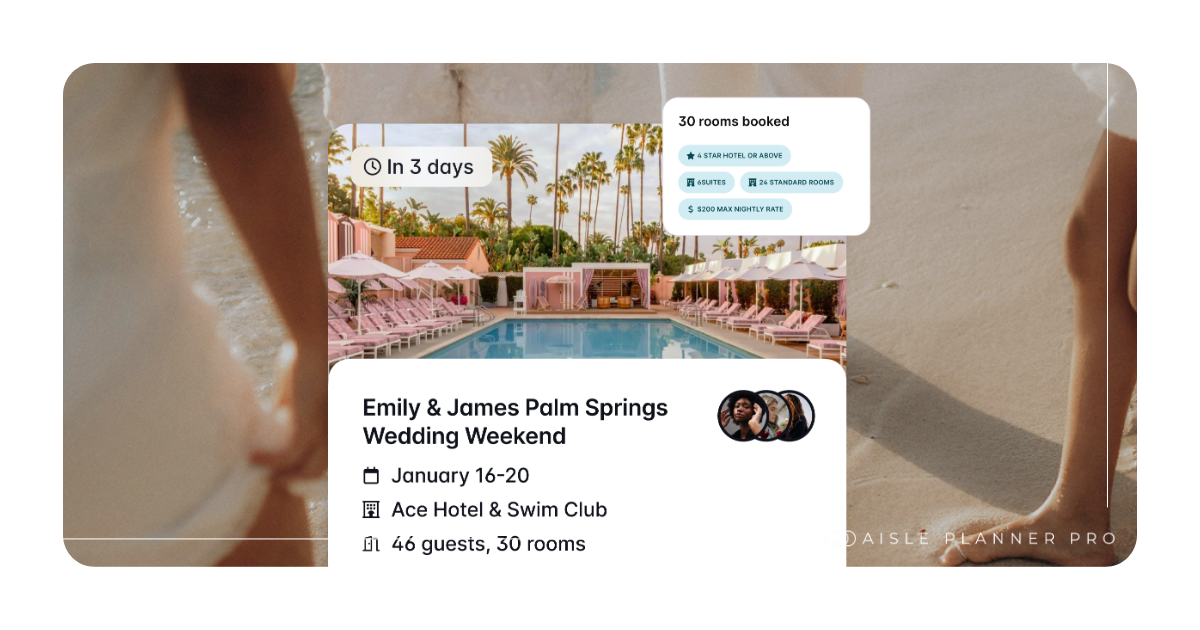
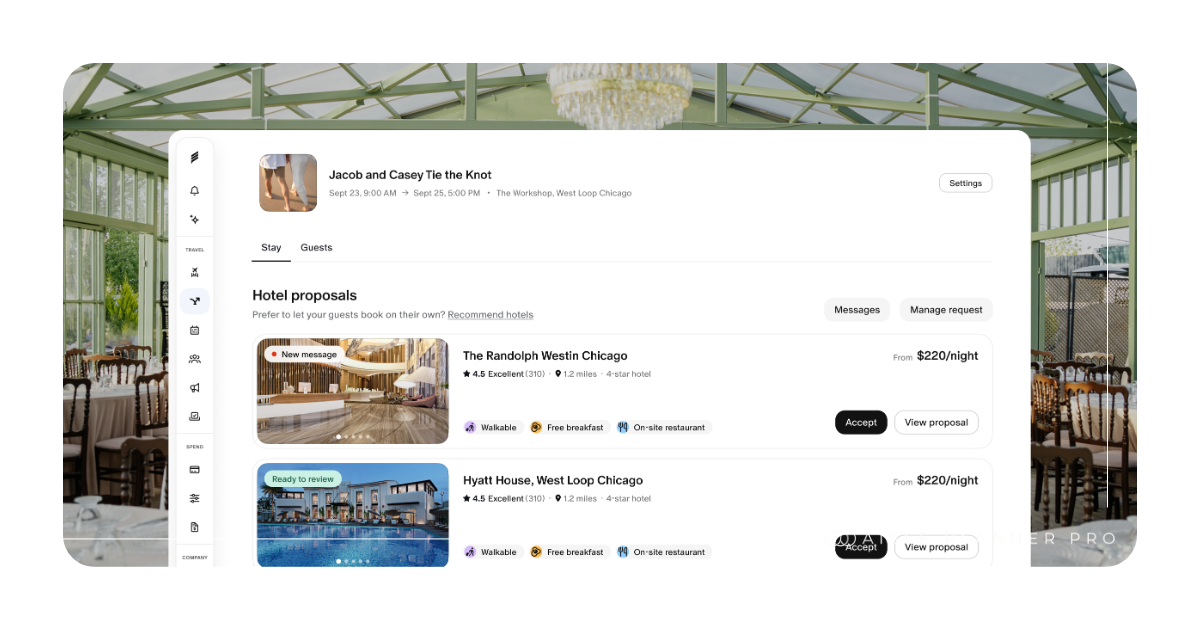
You can hand-pick specific hotels and Engine will get group rate quotes from just those, or you can share your requirements (rooms per night, max nightly rate, star rating, amenities, meeting space if you need one for the rehearsal dinner or getting-ready suite) and Engine will find matching hotels and pull quotes for you. Proposals often come back the same day.
From there, Engine’s Groups team can help you review the proposals and flag what’s worth negotiating on your couple’s behalf, like attrition, cutoff dates, damages basis, and added perks. This is how to avoid signing something the couple regrets three months later. Couples or guests can also save up to 22 percent on the negotiated rates.
The Suggested Hotels path
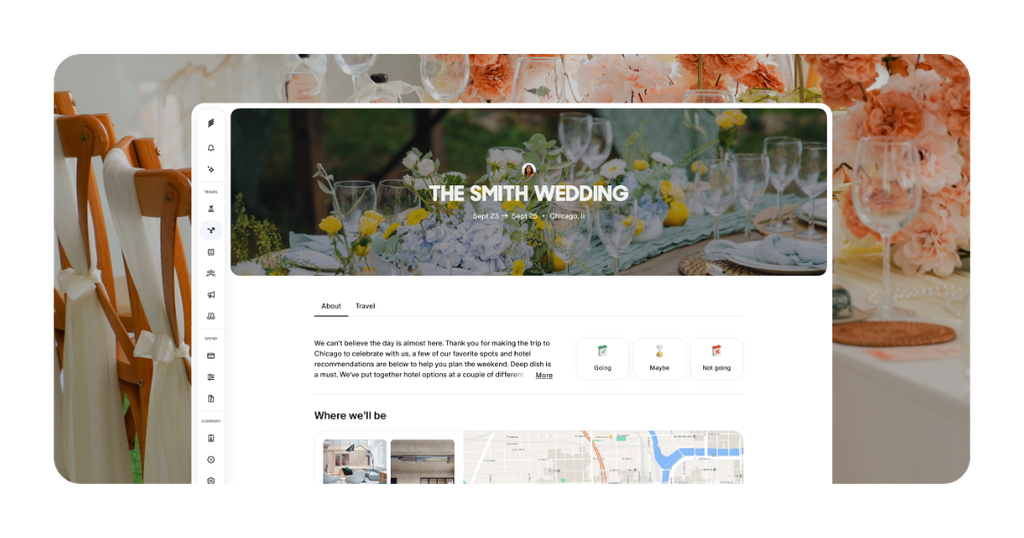
Create a custom event page for the wedding, populate it with the hotels you want to recommend, and share the link with guests. On the sourcing side, you’re browsing hotels near the venue on a map and filtering by whatever matters, whether that’s distance, star rating, price, or amenities. Add the ones you want, then write a short note on each so guests know what makes it worth considering.
The page itself is fully customizable. You can preview it as a guest before it goes live and adjust the fonts and cover image so it feels like the couple’s wedding, not a generic Engine page.
There’s no contract to sign and no cutoff date to worry about. Guests book directly through the page at Engine’s pre-negotiated rates and save an average of 26 percent, and you can watch RSVPs and bookings roll in as they happen.
Getting guests booked and support along the way
Once things are set up, the couple gets what they need to share with guests. For a Traditional Room Block, that’s one or multiple Engine booking links, one for each hotel block. For a Suggested Hotels page, that’s a single event page link.
Engine support is available to help with either path. On the Traditional Room Block side, Engine’s Groups team can help you handle contract updates, changes to the block, or anything else that comes up with the hotel. On the Suggested Hotels side, there’s no contract to manage, so support is lighter by design. Either way, help is available 24/7 for when something comes up the night before.
Room blocks don’t have to be the thing that eats your week. Whether the couple’s going with a courtesy block, a contracted one, or a curated set of hotel recommendations for guests, most of the work can be handed off. That gives you more time for the rest of the wedding and fewer email threads sitting in your inbox from hotel sales offices.
Aisle Planner Pro members get access to Engine through the member portal, so setting up a room block for the next wedding on the calendar is a few clicks away.
Ready to make room blocks easier?
We’re glad you asked!
Hotels want to reach business travelers while companies with traveling workforces want the best rates they can get.
Our platform brings everyone together to radically simplify trip management and give everyone exactly what they want. By booking with Engine, you and your company will save substantially in both time and money.
By providing great value to our hotel partners, we get great rates. That means we can take a small cut of each booking — enough to cover 24/7 Member Support and continually re-invest in new technology — and still offer deals to our members that are up to 60% less than the online public travel sites. That’s why we can keep Engine free to join and use.
No membership fees, no contracts, and no minimum spend.
We want our members to have plenty of options when booking lodging. Our platform currently offers 800,000+ properties worldwide.
You’ll find just about every hotel in the U.S. on our platform. If you don’t see a specific hotel when you search, it’s likely because the hotel is fully booked during your dates. In those rare cases, we’ll show you nearby comparable properties with availability during your travel dates.
We’re in the business of radically simplifying trip management for everyone, and we believe great hotel rates should be accessible to everyone, too.
That’s why Engine is free to join and use — no membership fees, no contracts, no minimum required spend, no catch.
Click here to learn more about our pricing.
Individual hotel properties set their own cancellation policies, which are clearly displayed during the booking process (you’ll see whether the room is refundable, and the last date you can cancel and receive your money back). After booking, you can find cancellation policy information in the “Important Information” section of your confirmation page.
If you need to keep travel plans flexible, there are two great options available.
You can select the Flex option during the booking process. Flex allows you to cancel any reservation up until noon the day of arrival or cut a trip short mid-stay and get refunded — regardless of the hotel’s cancellation policy.
If your company signs up for FlexPro, every traveler is fully covered with our highest degree of flexibility. With an annual plan, FlexPro costs $2,999 ($249/mo) covering everyone in your company. If you want to go month-to-month, FlexPro costs $299 – again, covering everyone in your company.